Background
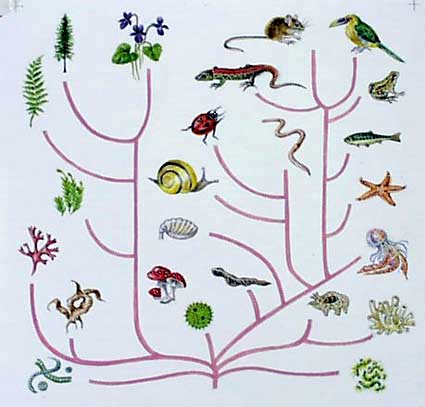 As far as we know, all life on Earth evolved from a single common ancestor. Therefore, all organisms are related to a certain extent. However, the closeness of relations between various species, and the point in their evolution when they split off from each other, is still unknown. In the past, scientists traced evolution by using anatomy to identify similar structures, and used this to build an evolutionary tree. However, this method has its shortcomings. For example, although chimpanzees look more similar to gorillas than they do to human beings, they are actually more closely related to us. With the use of Biotechnology, Proteomics- the study of proteins and their functions- allows researchers to trace how species have evolved in a much more precise and accurate manner.
Procedure
The fish muscle samples are being incubated for five minutes at room temperature in the sample buffer. The resulting mix (sans fish) is poured into a microtube and heated for five minutes at 95°C. This denatures the protein, unraveling it so it can be organized by gel electrophoresis. After GE, the samples will be arranged in bands according to size. The more similar bands are between samples, the more closely those two species are related.
